Designing a digital finance services roadmap for small agribusinesses

Client

NMB Bank
Tanzania

Partners

Mercy Corps AgriFin Accelerate
Dalberg Design

Role

Design research
Experience design

Methods

Contextual interviews
Participatory design
Prototype testing
Synthesis sessions

FintechAgricultureBanking

The goal

Help NMB grow digital customer acquisition and keep farmers engaged all year.

Tanzania’s Cashew Nut Act requires every cashew farmer to be paid through a bank account. NMB responded with Chap Chap, a quick, low-KYC account for farmers, but beyond that one payment a year it offered farmers little reason to stay. We set out to deepen engagement with NMB’s products, and to spot the risks of expanding into other value chains.

Over two research sprints, we built on insights from the first to develop and test new product, messaging and channel prototypes, and wrote them up as a playbook of recommendations for NMB.

My role

I used design research and experience design skills: building prototypes for field testing, running in-depth interviews and synthesis sessions, and designing and documenting the recommendations.
01 · Research

Two sprints in Southern Tanzania’s cashew regions

What we did

We spoke to farmers and stakeholders across the cashew value chain

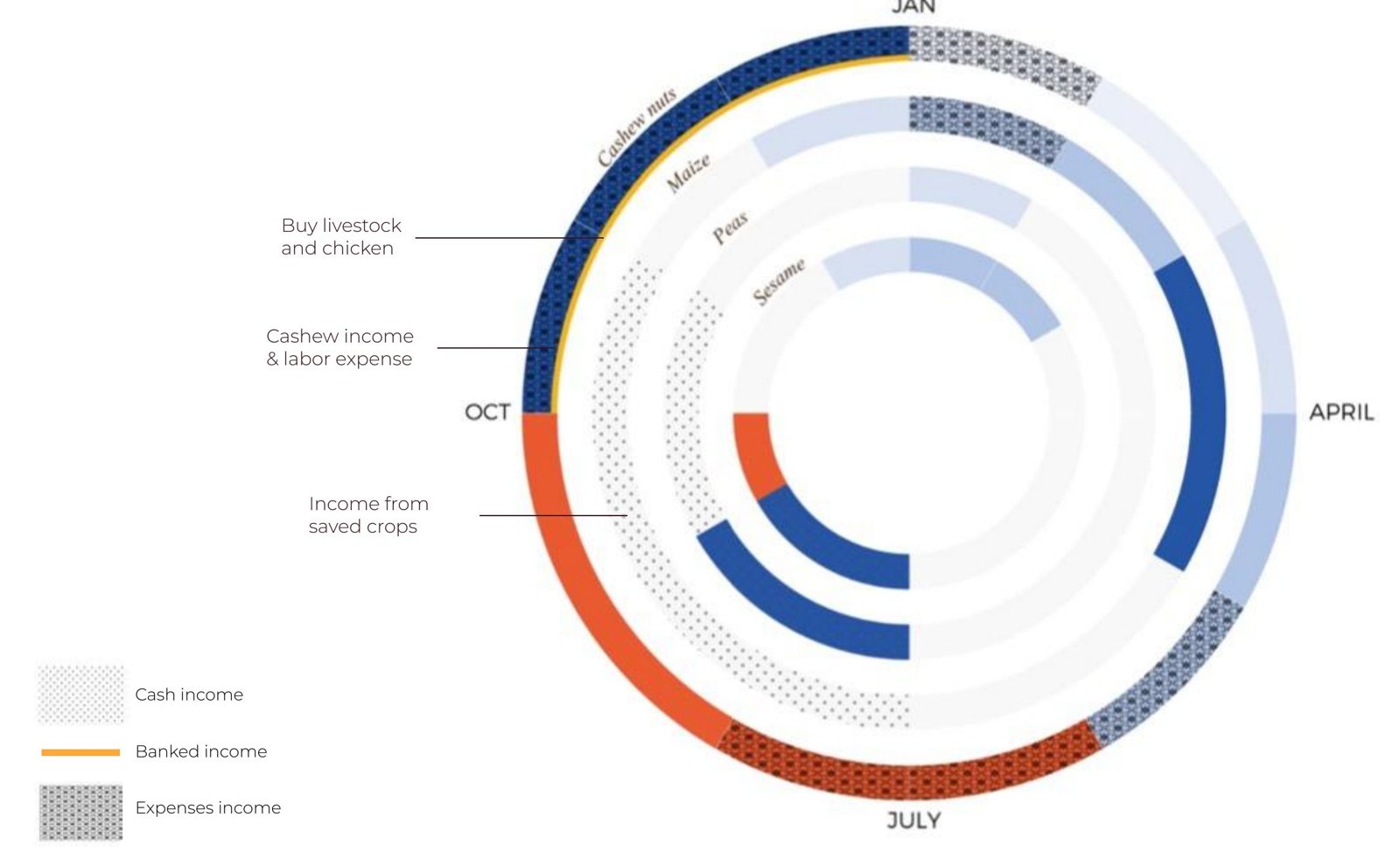
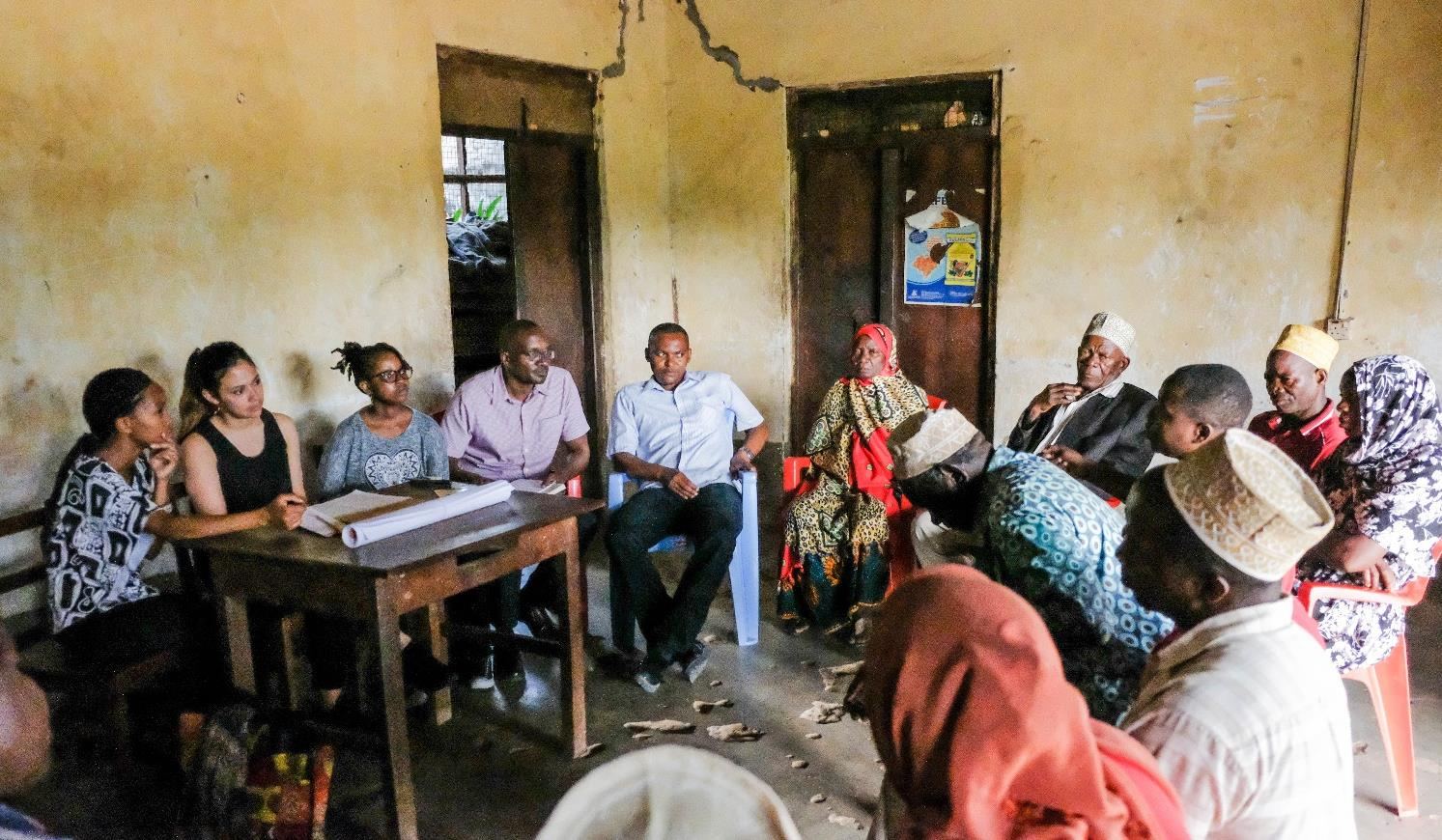
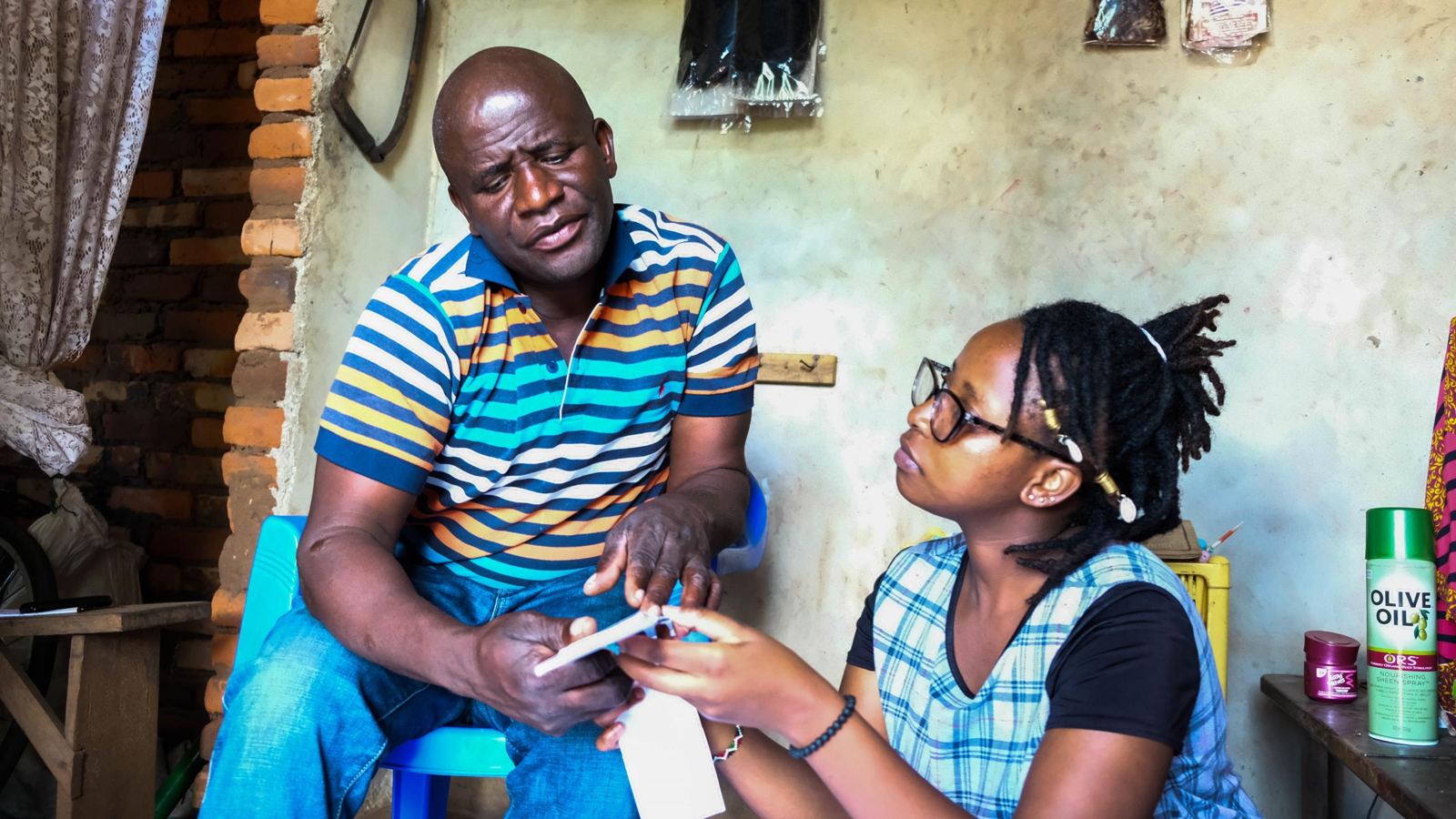
We wanted to understand their context, processes and challenges, so our recommendations would improve both their financial processes and their wider farming needs. We spent two to three hours with each person, combining observation with interviews, and used participatory design to map their year, their income and spending, and how they prioritise their needs.

64farmers across Mtwara (Tandahimba, Masasi, Newala) and Lindi (Lindi, Nachingwea)
12cooperatives (AMCOS) and farmer groups
20NMB agents, wakalas and branch employees
A participatory design session with farmers seated in a room
A researcher interviewing a man at a market stall

Stakeholders we spoke to

Three groups shape how farmers use the bank

The farmer

Incomes are diverse, but everyone faces the same cash-strapped months when inputs are the main need. Low financial literacy and low income make budgeting and saving hard.

The wakala

Agents who handle cash deposits and withdrawals for NMB customers, usually as a side business. Farmers still prefer visiting a branch.

The local branch

The main channel to farmers and the main support for wakalas and agents. Each branch has its own priorities and staff incentives.

Circular year map of farmer and stakeholder activities across the seasons
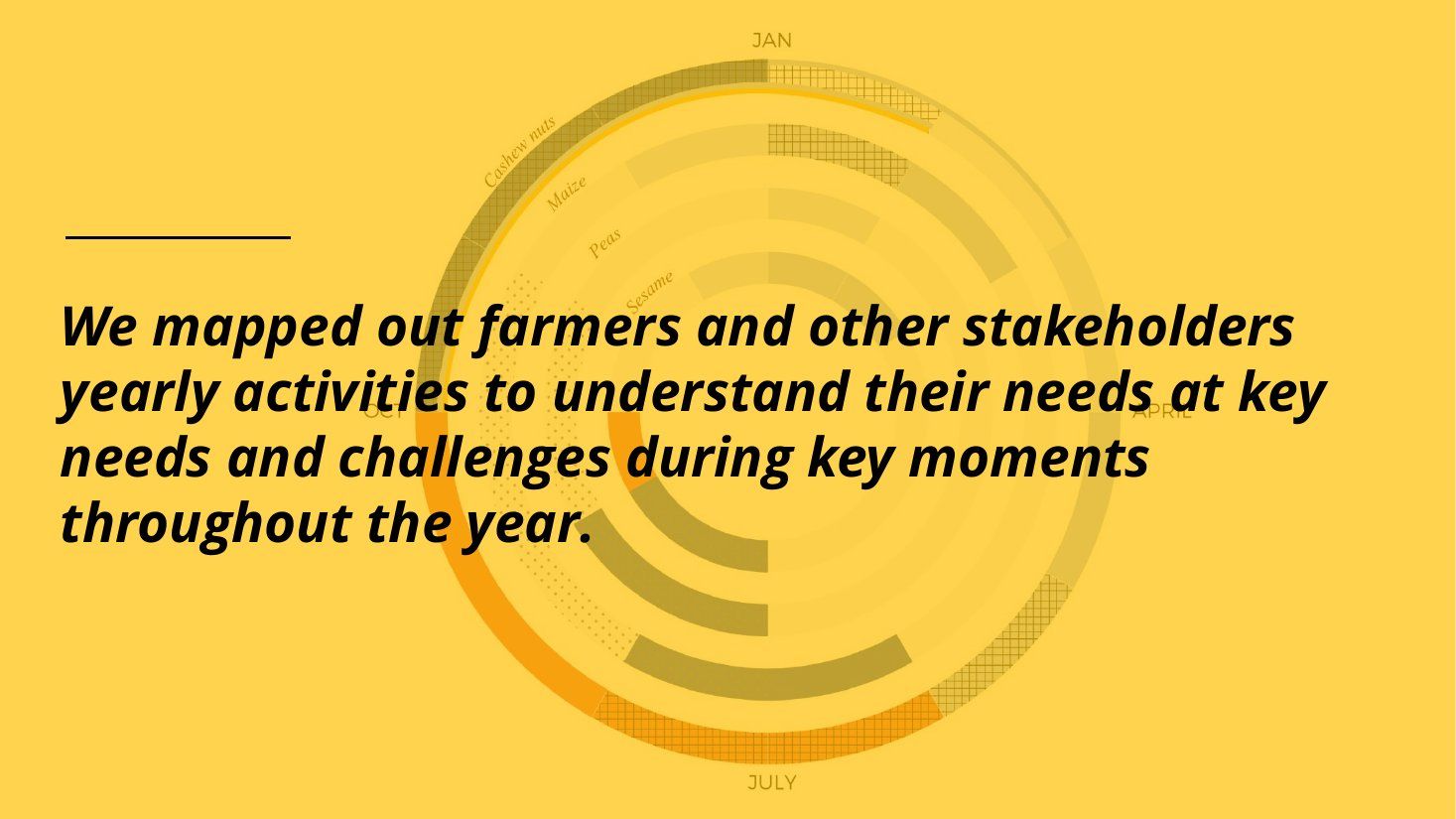
We mapped farmers' and stakeholders' activities across the year to find their needs and challenges at key moments.

Sprint II prototypes

Rough prototypes, taken back to the field

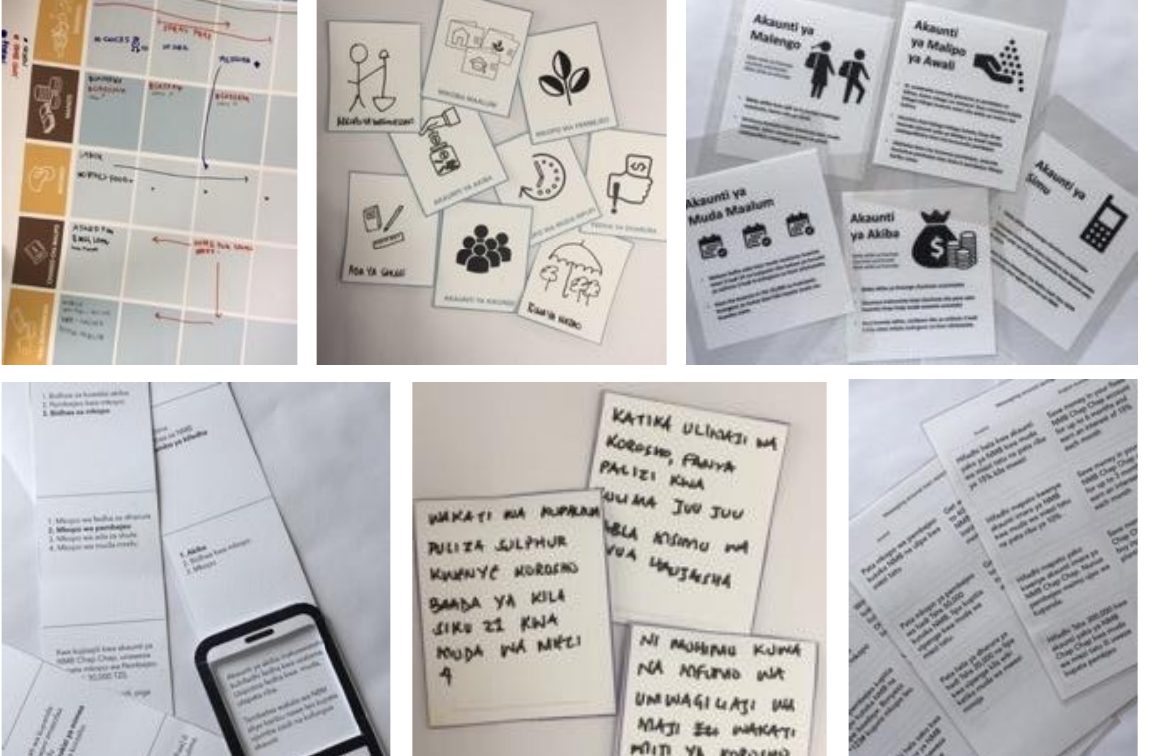
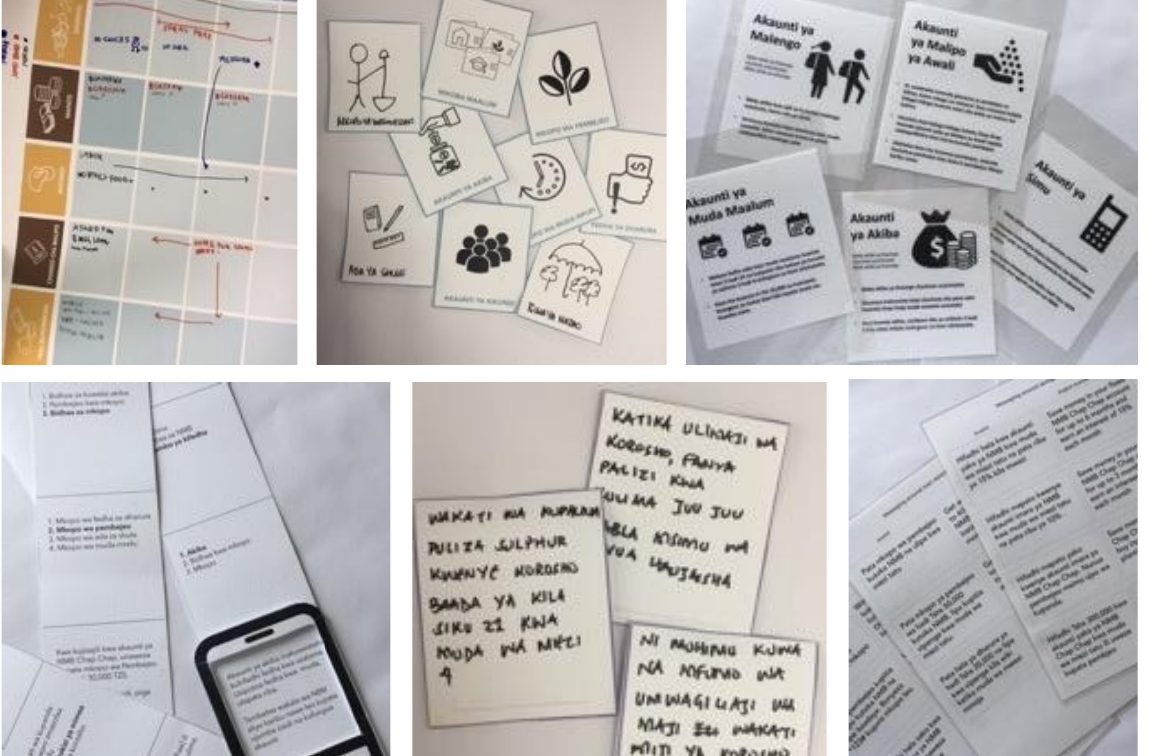
To test our first recommendations on channels, messaging and products, we made low-fidelity prototypes in Swahili and tested them with farmers, cooperative leaders, wakalas and branch staff.

  • USSD wireframes
  • Messaging channels and language
  • A product card sort
  • System walkthroughs
  • Daily and seasonal maps
Prototype materials: a seasonal map, icon cards, Swahili product cards, a paper USSD phone, and handwritten SMS messages

What we learned

Trust and timing matter as much as the products

Low literacy, including agricultural literacy, leads to poor use of the products on offer.

Farmers most need input loans of around TZS 500,000 in May and June, but today’s loans are too big and too hard to apply for.

Many don’t understand the current products.

The customer experience is inconsistent.

Incentives and KPIs need to be seasonal and not conflict with each other.

A lack of float, network and support from NMB hurts efficiency and service.

Unclear communication leads to misconceptions and distrust of products.


02 · Recommendations

A multi-level farmer outreach strategy

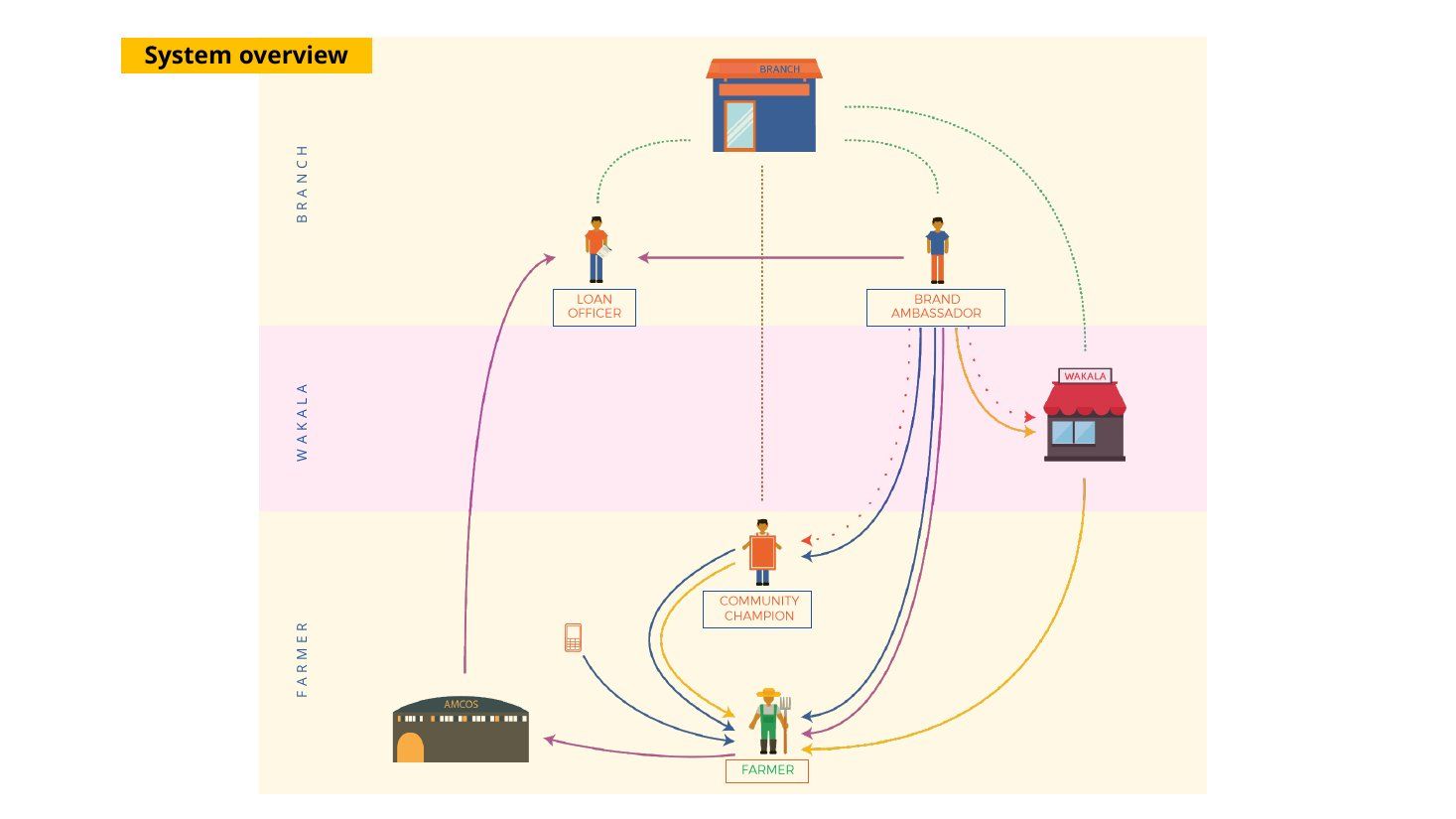
System overview

Clear roles and incentives for everyone between the bank and the farmer

The strategy improved processes inside the bank and mapped how the farmer interacts with the branch, wakalas and community.

System diagram connecting the farmer, wakala and branch

The loan officer

With brand ambassadors collecting verification data, loan officers have more time to process and verify loans.

Responsibilities

  • Verify information for loans over 1M before sending to HQ
  • For loans under 1M, check eligibility from past income, up to 25% of last year's income
  • Send the list to agents for data collection

Incentives

  • Commission on loans verified, processed and repaid

The community champion

A trusted, respected community member with leadership skills, trained by brand ambassadors.

Responsibilities

  • Offer support, training and product information
  • Add to the ambassadors' financial literacy training day to day

Incentives

  • A twice-yearly prize for the community with the strongest deposit retention

The wakala

Responsibilities

  • Serve customers with deposits, withdrawals and enquiries
  • Open personal accounts and share basic product information
  • Potentially upgrade accounts in future

Incentives

  • Year-round: opening personal accounts

The farmer

More and stronger touchpoints build awareness and regular use, backed by digital and face-to-face education.

Benefits

  • Seasonal financial literacy training from brand ambassadors
  • Year-round basic training from the community champion
  • Digital support on finance and farming

Value

  • Better budgeting and planning for the farm and household
  • A clearer grasp of banking products and why saving matters

Highlights

Recommendations across the farmer, the wakala and the branch

Small, input-only loans

Inputs go straight from a supplier, capped at a third of last season’s cashew income and repaid automatically from the next cashew payment.

Seasonal SMS education

Opt-in finance and farming tips timed to the farming calendar, backed by face-to-face sessions from brand ambassadors.

A stronger wakala network

A local wakala map to build trust, instant float credit for remote wakalas, and letting them open Chap Chap accounts.

One simple account

Keep Chap Chap for sign-up, then move farmers into a single Kilimo account with a card, loans and a fixed savings wallet.

Simplify the products

Chap Chap to sign up, Kilimo to stay

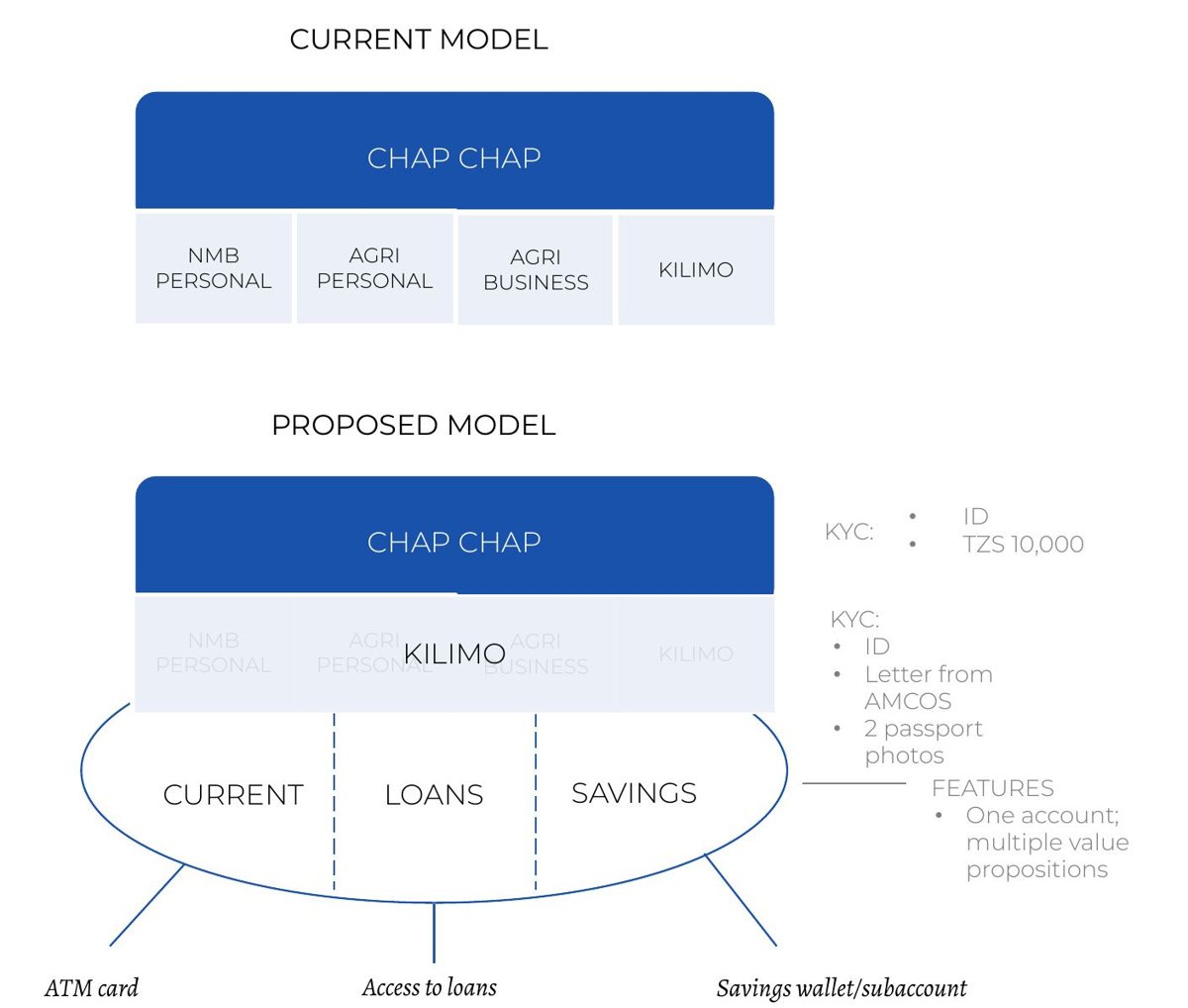
Farmers and staff alike were confused by four overlapping accounts. We recommended keeping Chap Chap as the easy way in, then moving farmers into a single Kilimo account: a current account with a card, access to loans, and a savings wallet that locks money away for three or six months.

Branch targets would become seasonal, with commission for opening any account and for upgrades, so staff are rewarded for the right account rather than any account.

Diagram of the current model with four accounts under Chap Chap, and the proposed model with one Kilimo account offering current, loans and savings

03 · Roadmap

From quick wins to bigger bets

We started with physical touchpoints, because trust comes first, and planned for digital ones to grow as farmers used digital financial services more.

Quick wins

Use existing infrastructure

  • Wakala map and awareness
  • Wakala engagement guidelines
  • SMS financial literacy and farming tips
  • Clearer, more transparent communication

Medium

Change current infrastructure

  • Wakalas open Chap Chap accounts
  • Standardised staff training
  • SME loans for wakalas
  • Grow the wakala network close to farmers

Big projects

Deeper engagement and resources

  • Face-to-face financial literacy education
  • Small, direct input loans
  • Simplify Chap Chap into Kilimo
  • Seasonal, non-conflicting KPIs

Next project

Redesigning Watchtower’s navigation

Read next case study