Extending the footprint of a digital service provider in rural Zambia

Project partner

Mercy Corps AgriFin Accelerate

Design partner

Dalberg Design

Role

Design fellow
Field assets, interviews, frameworks, prototypes

Methods

Contextual & group interviews
Participatory design
Client co-design workshops

FintechMobile moneyImpact design

The goal

Understand village savings groups, and validate new savings and loan products for them.

Our client offers mobile money that makes it easy to send money across Zambia. To reach the rural market, they built new savings and loan products.

Our objective was to understand the challenges, needs and preferences of village savings and loan associations (VSLAs), find new opportunities for the client, and validate the products.

Mature VSLAs looked like the right way in. Their members are selected for good financial behaviour, trained to follow procedure and already save regularly, yet their groups can’t lend them as much as they need. We turned what we learned into a playbook for taking the products from a first pilot to the rural mass market.

My role

I worked as a design fellow with the Dalberg Design team. I developed assets for the field, ran user interviews, built frameworks and designed prototypes.
Who's who

VSLA membersCommunity groups that save together and lend to each other
Village agentsThe closest and most trusted touchpoint
Mobile money providerLaunching savings and loan products

01 · Research

Two weeks in rural Livingstone

What we did

We explored what works for savings groups, and why

We looked at the needs and challenges VSLAs face, what makes the model work, and why each of their activities matters. This showed us their key motivators and values, and how to build a market entry strategy around them.

2,500mature savings groups, active for two years or more
64,200members in those groups, a ready entry point
1.1mtarget users in the wider rural mass market
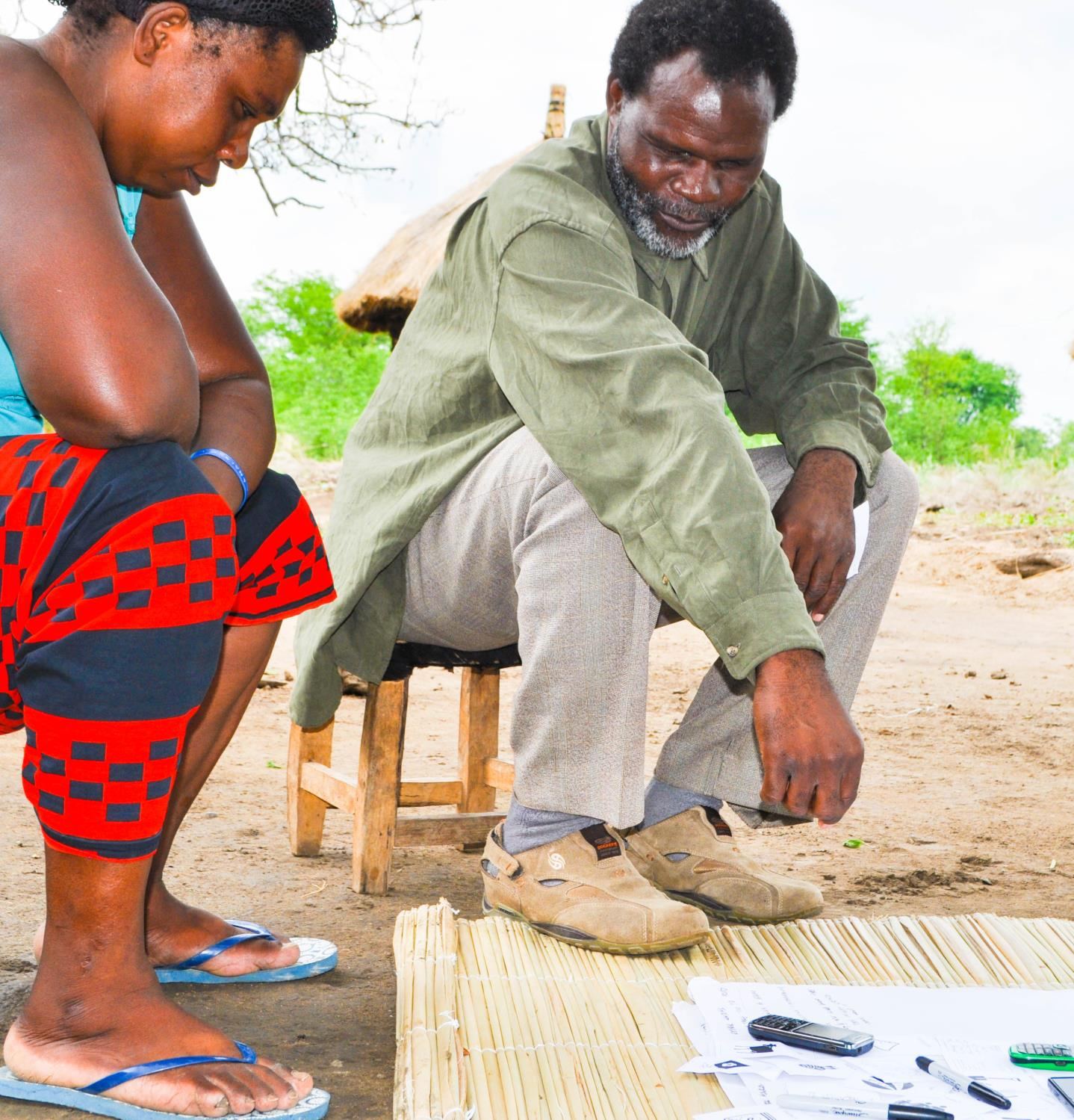
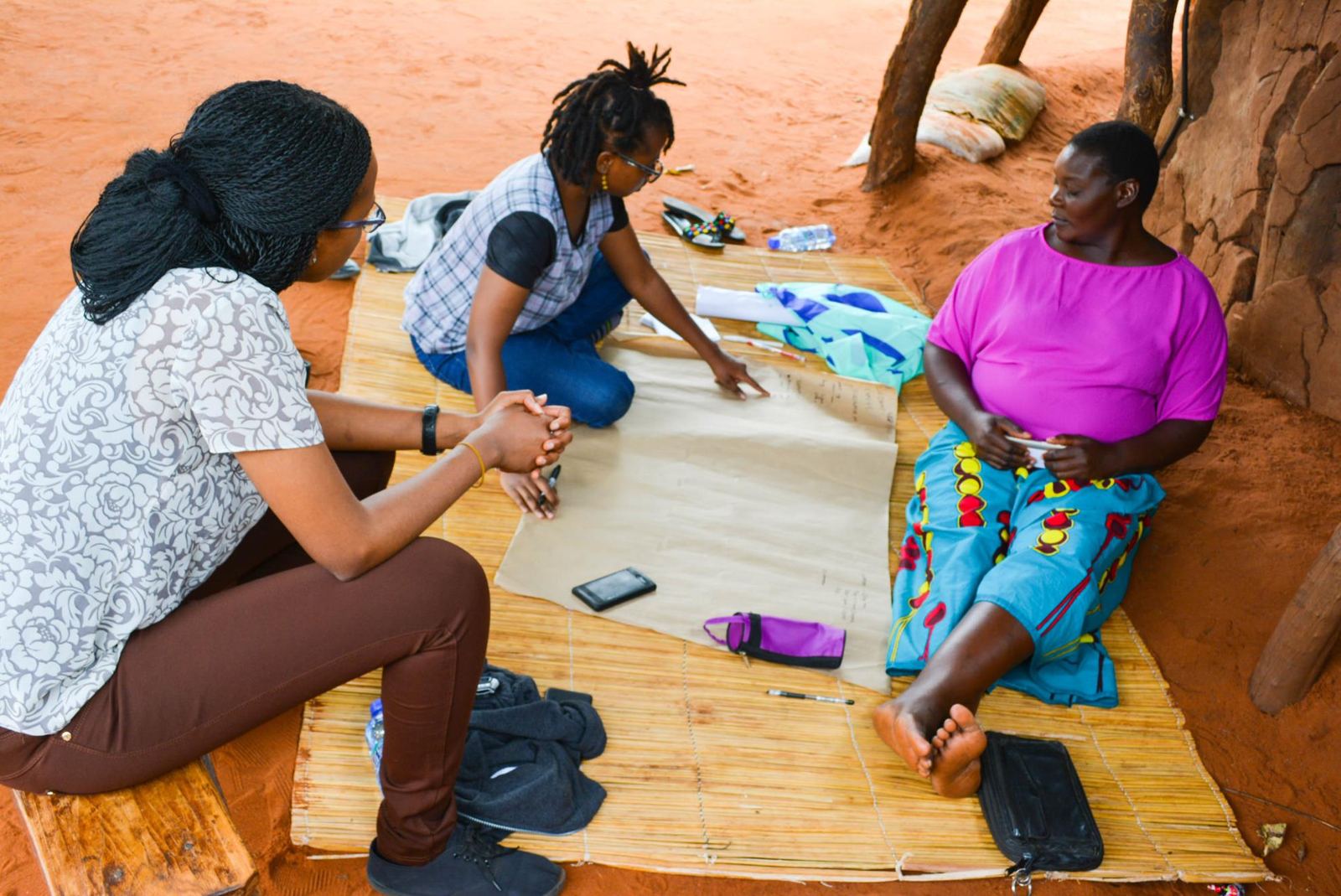
Researchers sitting on a mat with VSLA members reviewing materials
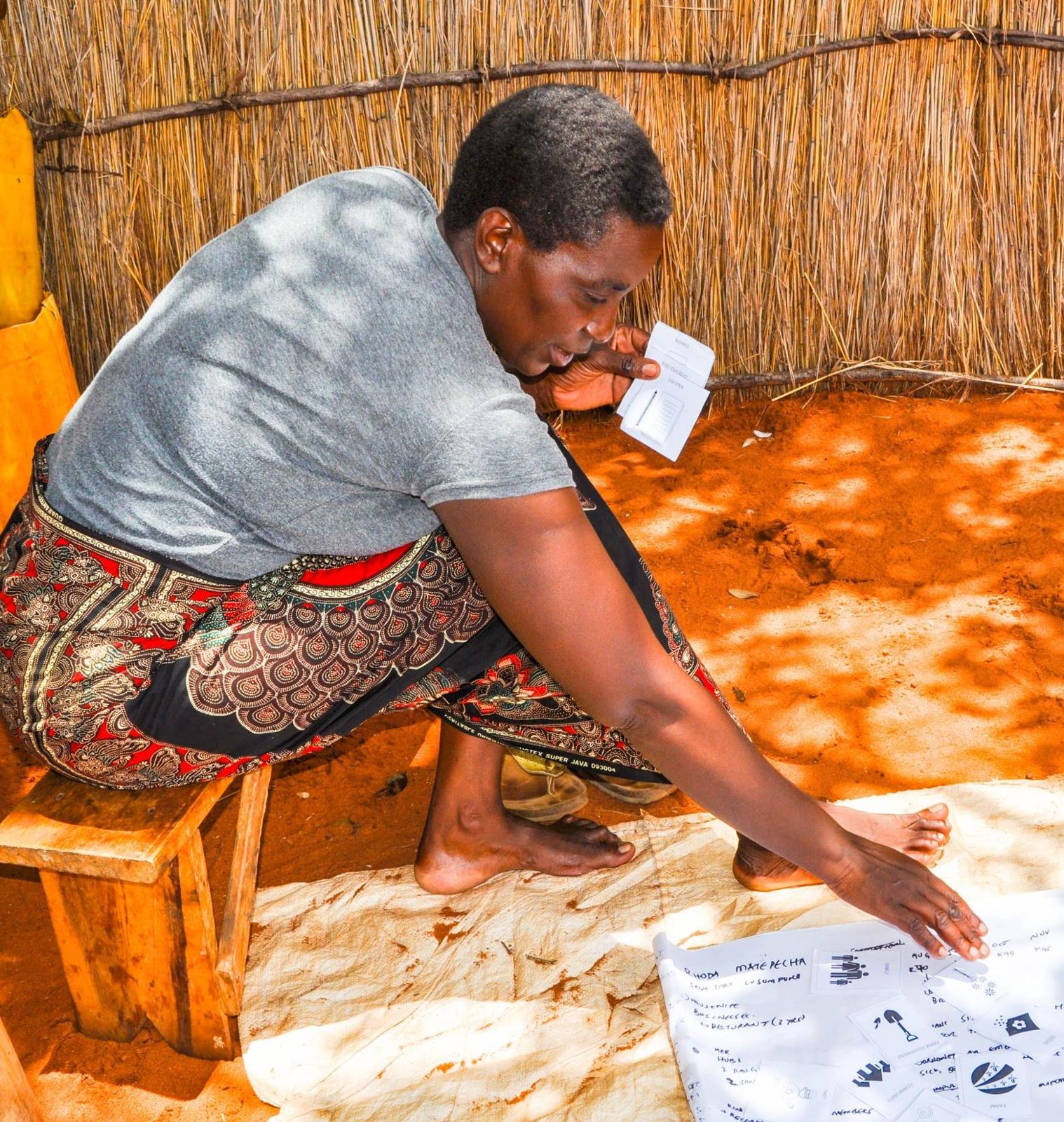
A VSLA member pointing at prototype cards laid on the ground

What we learned

Trust and procedure hold the groups together

Village agents are the closest touchpoint and the most trusted by VSLAs.

VSLAs are trained to follow procedures.

VSLAs choose members with good, similar behaviour, and prefer members with a source of income.

VSLAs have a limited lending capacity.

Women embraced the first VSLAs. Men joined once the groups proved successful.

Members want longer loan periods and are not very sensitive to higher interest.

“30 days to repay the loan would be too short for me. It depends on how business goes.”

VSLA member

Use cases

Four reasons members would borrow

Income around Livingstone swings with the tourism and farming seasons. That pointed to four first use cases for the loan.

Household expenses

Food, school fees, house repairs and emergencies. Some are seasonal, but emergencies can come at any time.

Business working capital

Shop owners need more cash for stock in the May to August peak season, when turnover is highest.

Farm inputs

Farmers are short of cash before planting and around harvest, after months without income.

Group top-up

Groups use their pooled savings to unlock a larger loan, which they lend on to members over 90 days.


02 · Recommendations

Using VSLAs as the entry point to the rural market

Recommendation 01

Refine the product offer so it fits how members earn and repay

Loan terms

  • Offer longer and more flexible repayment, in instalments
  • Give cash back into the savings wallet for repaying on time
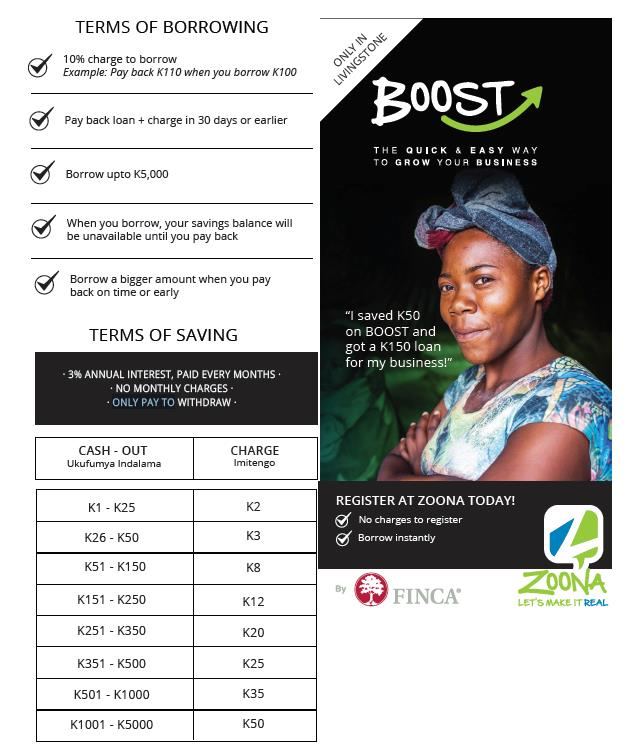
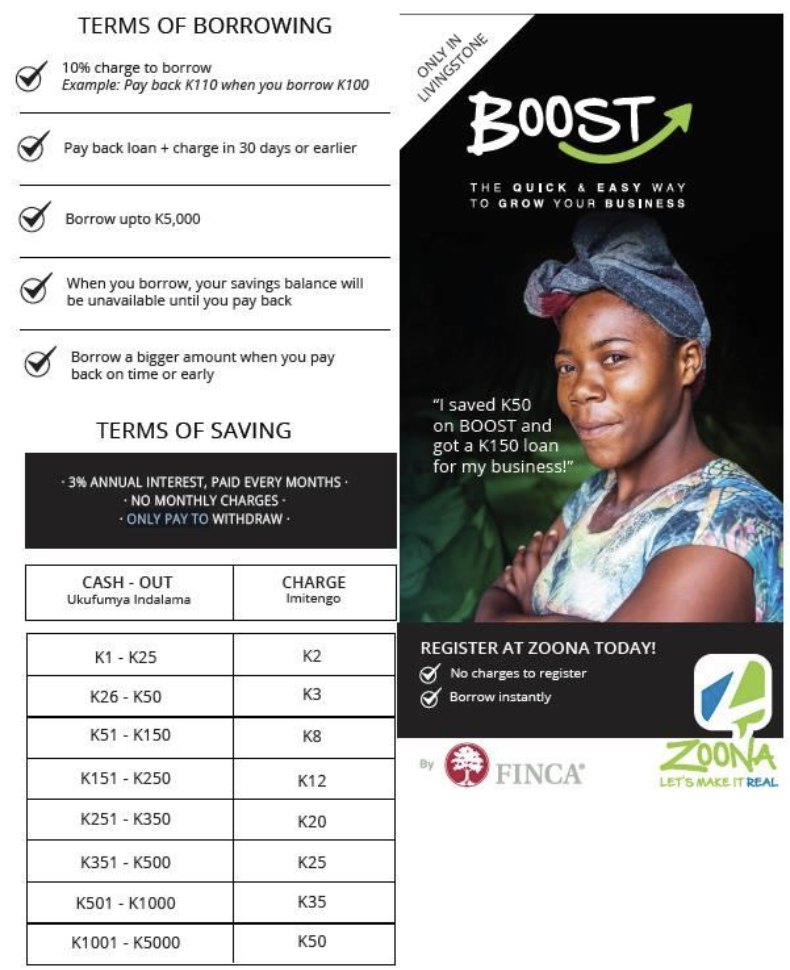
  • A 30-day loan that can stretch to 90 days, for ZMK 2,000 to 8,000 (up to three times savings), at 15% interest with 5% cash back

Marketing materials

  • Frame the loan as a step towards a business loan
  • Highlight security-free loan sizes and secure savings
  • Lead with loan amount, repayment period and interest
  • Explain where and how to repay, and what happens if you don't
  • Use the groups’ own words, like “constitution” and “security-free”, and keep the brochure to a single front and back
Prototype marketing flyer and terms sheet for the Boost savings and loan product

Recommendation 02

Brand ambassadors and roving agents to bring the service to the village

Recruit village agents and other trusted community members as brand ambassadors to lead awareness, education and performance inside VSLAs. Alongside them, roving agents on bicycles or motorbikes give members a place to deposit and withdraw cash, so they don’t have to make an expensive trip to town.

The brand ambassador's role

  1. Act as brand ambassadors
  2. Identify group members
  3. Register and onboard new members
  4. Drive retention and usage
  5. Support users to hit targets like loan repayment

Recommendation 03

A virtual brand ambassador to carry the relationship at scale

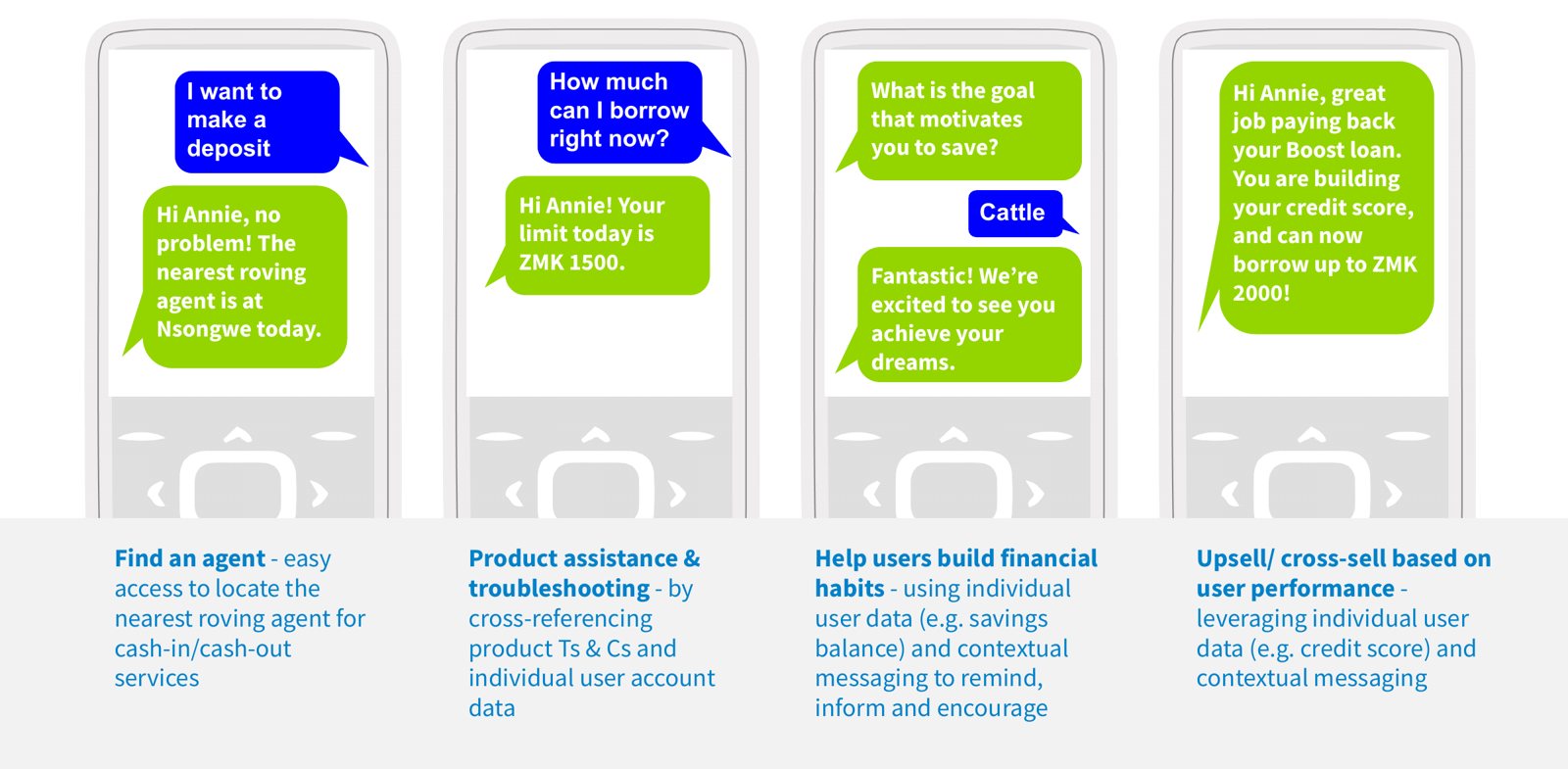
Ambassadors can’t visit every group forever. As the service grows, a simple chat assistant takes on more of their work. It helps members find the nearest agent, answers product questions, encourages them to save towards a goal and offers larger loans as they build a repayment record. Ambassadors stay on in the places that still need face-to-face support, and they introduce members to the assistant with a live demo.

Four feature phone chats with a virtual brand ambassador: finding an agent, checking a loan limit, setting a savings goal and unlocking a larger loan

03 · Roadmap

From one pilot to the rural mass market

Pilot 1

VSLAs in Livingstone and Choma

  • Flexible repayment and new cost options
  • Local language and real use cases in messaging
  • Introduce brand ambassadors and roving agents

Pilot 2

More VSLAs across four provinces

  • Larger loans based on repayment history
  • A savings product modelled on the VSLA cycle
  • Test the virtual brand ambassador
  • Recruit ambassadors through NGO partners

Scale

Rural users across Zambia

  • Keep tailoring the product to new markets
  • Make the virtual ambassador the main channel
  • Keep ambassadors where face-to-face matters most

Next project

Building DART to resolve chargebacks in bulk

Read next case study